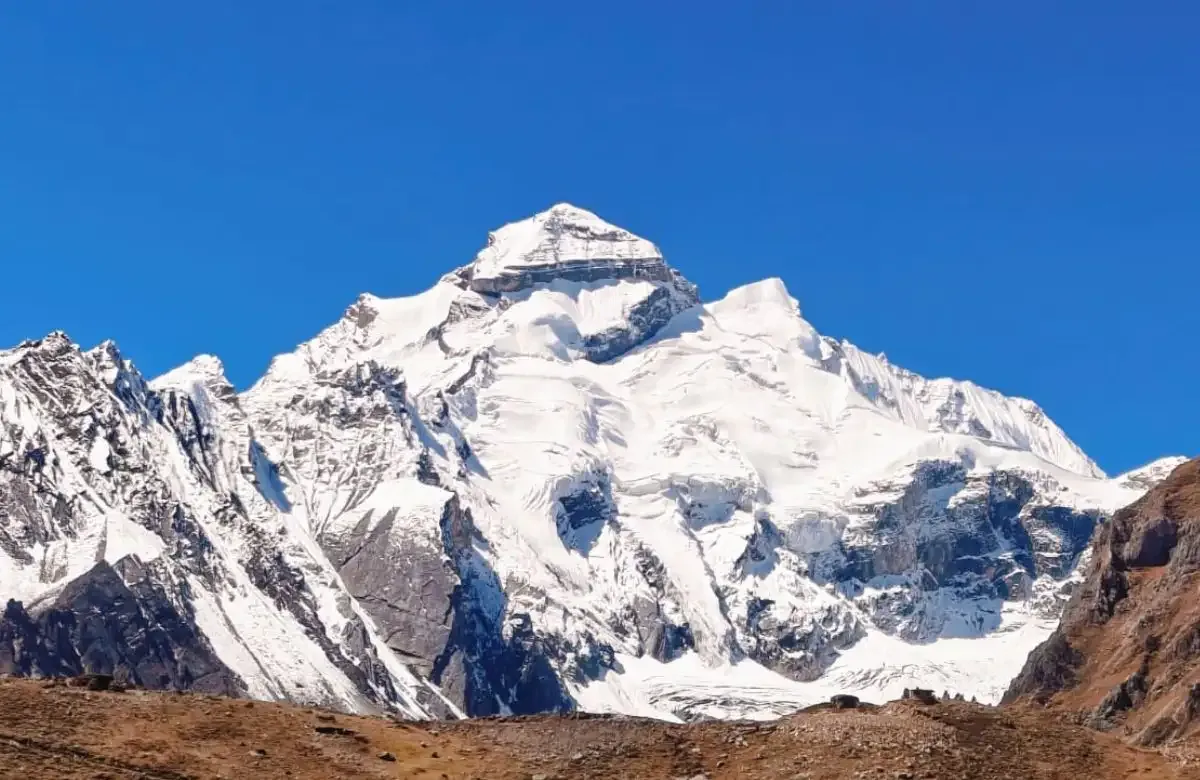
The experience unfolds gradually as you travel deeper into the Kumaon Himalayas, eventually reaching Jolingkong and Parvati Sarovar at around 4,500 metres (nearly 15,000 feet), where the presence of the mountain is most deeply felt.
Believed to be the earthly abode of Lord Shiva, Adi Kailash offers a rare opportunity to experience a sacred Himalayan landscape within India — raw, remote, and profoundly spiritual.
This guide brings together real on-ground insights from Himalayan expeditions, helping you plan your Adi Kailash Yatra with clarity, safety, and a deeper understanding of the journey ahead.
The Region
Introduction
Located in the remote Pithoragarh district of Uttarakhand, Adi Kailash lies close to the Indo-Tibetan border in the Kumaon Himalayas — one of the most pristine and least-explored regions of India.
The journey to Adi Kailash typically begins from Dharchula, a small Himalayan town that serves as the gateway to this sacred circuit. From here, travellers move deeper into the mountains through routes like Tawaghat, Gunji, and Nabidhang, gradually ascending into high-altitude terrain.
Often undertaken along with a visit to Om Parvat, this journey is not just about reaching a destination, but about experiencing a remote Himalayan landscape where spirituality, culture, and raw natural beauty come together.
Due to its location in a sensitive border region, the yatra requires permits and careful planning — making guided expeditions a preferred choice for most travellers.
Planning your Adi Kailash Yatra
Shivlok Journey runs guided Adi Kailash & Om Parvat expeditions from Delhi and Haldwani. We handle the Inner Line Permit, the checkpoint formalities, comfortable stays, meals and transport — so the planning is done and the journey is yours.